ACM Multimedia 2026 Workshop and Grand Challenge

NeuroMM 2026

The 1st International Workshop on Multimodal Neurophysiological Intelligence for Multimedia

NeuroMM treats EEG, ECG, EMG, and wearable biosignals as first-class multimedia modalities and advances cross-modal reasoning with synchronized video, audio, and contextual streams.

ACM Multimedia 2026 | NeuroMM Workshop and Grand Challenge

Introduction

Multimodal neurophysiological intelligence for human-aware multimedia AI.

Rationale

Multimedia systems have mainly focused on external perception, including image, video, audio, and language. NeuroMM 2026 expands this scope by integrating internal physiological signals such as EEG, ECG, EMG, and wearable sensing into a unified multimedia framework.

This direction is timely because multimodal foundation models, long-sequence modeling, and sensing infrastructure are converging with clinically grounded data resources. NeuroMM addresses the gap between medical signal interpretation and multimedia reasoning.

The long-term vision is a sustained NeuroMM ecosystem spanning epilepsy analysis, seizure prediction, mental health assessment, sleep analysis, and cardiac monitoring with standardized benchmarks and protocols.

Focus Areas

  • Cross-modal learning with EEG, ECG, EMG and video
  • Robust reasoning under artifacts and domain shift
  • Neuro-signal foundation models and self-supervision
  • Trustworthy and ethical AI for physiological data
  • Clinically grounded multimedia benchmarks

News

Latest updates for the workshop and challenge.

  • Mar 09, 2026 NeuroMM 2026 official website launched.
  • Apr 20, 2026 (Planned) Challenge data and baseline resources release.
  • Jun 20, 2026 (Planned) Result submission opens for challenge tracks.
  • Contact Official inquiry email updated: contact@neuromm.org

NeuroMM Grand Challenge

Interictal Epileptiform Discharge Detection and Localization in Multimodal Neuro-Signals.

Challenge Overview

NeuroMM 2026 reframes epilepsy analysis as multimodal reasoning by integrating EEG-centered physiological data with synchronized contextual information. The challenge is built on vEpiSet, a clinically grounded benchmark collected under standardized protocols.

Dataset highlights include 84 subjects, 20-minute recordings per subject, and 25,449 four-second epochs with expert-reviewed labels, covering both IED and non-IED events under realistic clinical conditions.

Official Tracks

  • NMM-Basic-IED: Robust IED detection from heterogeneous physiological signals.
  • NMM-Context-IED: Vision-enhanced detection with synchronized contextual features.
  • NMM-Source-IED: Spatial localization of epileptogenic regions across five classes.

Evaluation Protocol

  • Track 1 and Track 2: Primary metric AUPRC, auxiliary metric Precision@Sensitivity=70%.
  • Track 3: Primary metric Weighted-F1, auxiliary metric Macro-F1.
  • Metrics are designed for severe class imbalance and clinical diagnostic relevance.

Dataset Snapshot

Subjects 84 (52 epilepsy, 32 control)
Signals EEG, ECG, EMG, synchronized behavioral context
Epochs 25,449 total (2,516 IED, 22,933 non-IED)
Clinical Source Peking Union Medical College Hospital

Workshop

The 1st International Workshop on Multimodal Neurophysiological Intelligence for Multimedia.

Scope

Multimedia research has traditionally focused on external perception modalities such as images, video, audio, and language. These modalities capture observable behavior, communication, and environmental context, forming the foundation of modern multimedia understanding systems. In contrast, neurophysiological signals, including electroencephalography (EEG), electrocardiography (ECG), electromyography (EMG), and wearable biosensors, encode internal human states related to cognition, attention, emotion, and neural dynamics.

NeuroMM 2026 bridges this divide by introducing Multimodal Neurophysiological Intelligence, a unified computational framework that synergizes heterogeneous physiological signals with synchronized multimedia streams. This approach treats physiological sensing not as a niche medical modality, but as a core extension of multimedia computing for joint reasoning over internal and external human states.

Unlike biomedical or BCI workshops that emphasize isolated neural decoding or clinical pipelines, NeuroMM centers on multimedia-driven neurophysiological reasoning. The workshop aligns with ACM Multimedia by expanding media understanding from external perception toward internal human-state modeling.

A key highlight is the NeuroMM Challenge built on hospital-scale, clinician-annotated synchronized data combining patient monitoring video with EEG, EMG, and ECG. This benchmark targets the real-world problem of distinguishing epileptic discharges from artifacts and noise with multimodal evidence.

Beyond epilepsy detection, NeuroMM aims to establish an ongoing ecosystem covering seizure prediction, mental health assessment, sleep analysis, and cardiac monitoring, with shared tasks, datasets, and evaluation protocols for trustworthy multimodal neuro-intelligence.
Topics of Interest

  • Multimodal learning with EEG, ECG, EMG, and wearable signals
  • Cross-modal reasoning between physiological signals and video/audio/text
  • Neuro-signal foundation models
  • Multimodal benchmarks integrating physiological and behavioral data
  • Robust learning under noise, artifacts, and domain shifts
  • Self-supervised learning for neurophysiological data
  • Neuro-aware multimedia understanding
  • Emotion, attention, and cognitive state modeling
  • Human-centered AI using physiological sensing
  • Medical and non-medical neuro-multimedia applications
  • Ethical and trustworthy AI for physiological data
  • Dataset construction and evaluation protocols

Schedule

Timeline view with year navigation.

2026

Apr 20, 2026

Data, baseline paper and baseline code available.

Jun 20, 2026

Result submission starts.

Jul 1, 2026

Result submission deadline.

Jul 12, 2026

Paper submission deadline.

Aug 5, 2026

Paper acceptance notification.

Aug 19, 2026

Camera-ready deadline.

2025

Archive

Preparatory work and proposal drafting period.

Year

Speakers

Invited speakers will be announced.

Speaker placeholder
Speaker Name (TBA)

Affiliation (TBA)

Talk Title (TBA)

Speaker abstract and biography will be updated once confirmed.

Speaker placeholder
Speaker Name (TBA)

Affiliation (TBA)

Talk Title (TBA)

Speaker abstract and biography will be updated once confirmed.

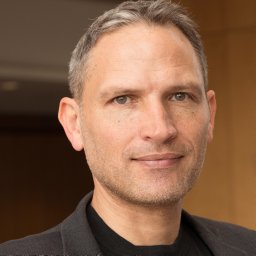
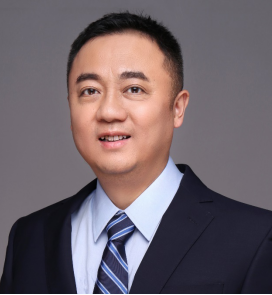
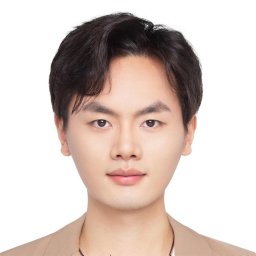
Organizing Committee

Committee sections are displayed in collapsible panels.

Qi Tian
Qi Tian

Guangdong Laboratory & Huawei

Karim Jerbi
Karim Jerbi

University of Montreal

Laizhong Cui
Laizhong Cui

Shenzhen University & Guangdong Laboratory

Fei Ma
Fei Ma

Guangdong Laboratory

Zitong Yu
Zitong Yu

Great Bay University

Larbi Boubchir
Larbi Boubchir

University of Paris 8

Zebang Cheng
Zebang Cheng

Shenzhen University & Guangdong Laboratory

Haibo He
Haibo He

NetEase Media Technology (Beijing)

Philippe Fournier-Viger

Shenzhen University

Zheng Lian
Zheng Lian

Tongji University

Nan Lin
Nan Lin

Peking Union Medical College Hospital

Yisu Dong
Yisu Dong

NetEase Media Technology (Beijing)

Lian Li
Lian Li

NetEase Media Technology (Beijing)

Peng Hu
Peng Hu

NetEase Media Technology (Beijing)

Zi Liang
Zi Liang

NetEase Media Technology (Beijing)

Hongbo Xu
Hongbo Xu

Guangdong Laboratory

Minghui Li
Minghui Li

Guangdong Laboratory

Contact

Official contact for workshop and challenge inquiries.